Field Notes
Funktion-One Dance Stack Components and Signal Chain
A plain-language walk through sources, mixing, processing, amplification, loudspeaker sections, monitoring, and the verification steps around an operated Dance Stack.
By Jacob LillA signal chain is the route audio follows from source to listener. Each stage can preserve or damage level, frequency balance, dynamics, timing, and reliability. Understanding the chain makes it easier to advance a show and to distinguish a complete system from a cabinet list.
Sources and mixing
Sources may include DJ mixers, playback computers, instruments, microphones, media servers, consoles, and guest devices. Input level, connector type, sample path, redundancy, and ownership should be known before the event.
System processing
The processor divides frequency bands, establishes level relationships, applies necessary delay and equalization, and protects the system through appropriate limiting. Configuration must correspond to the actual loudspeakers, amplifiers, wiring, and deployment.
Amplification and loudspeakers
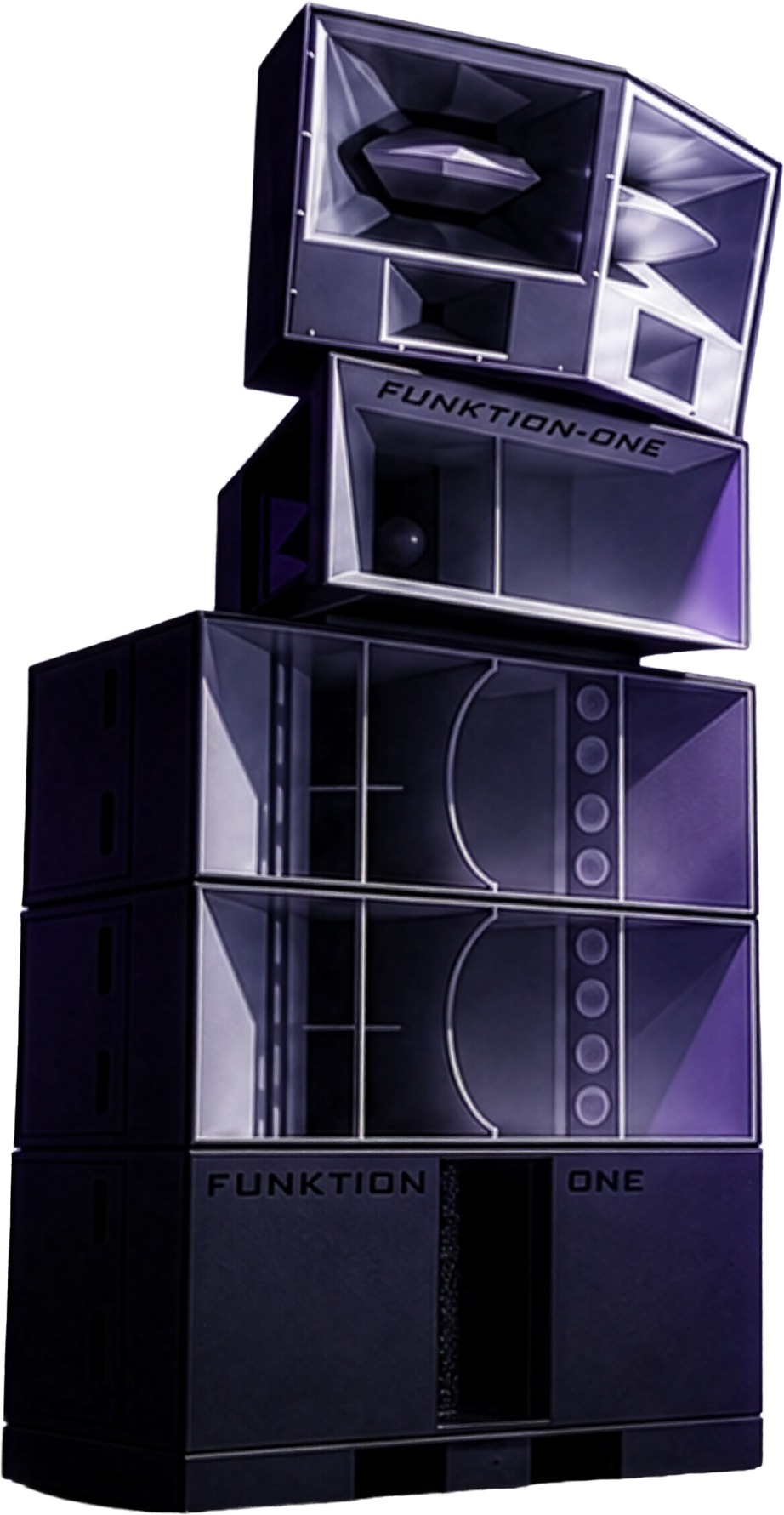
Amplifiers provide controlled power to the loudspeaker sections. Headroom, channel assignment, impedance, cabling, ventilation, and power distribution all matter. The DS210, DS15, F218 Mk2, and Infrabass sections then reproduce their intended parts of the spectrum.
Verification before doors
The team verifies wiring, polarity, routing, processing state, amplifier channels, individual sections, alignment, coverage, source playback, monitoring, backup paths, and safe operating limits. Listening remains essential even when measurement tools are used.